Bitcoin Adoption Fuels Global Financial Inclusion
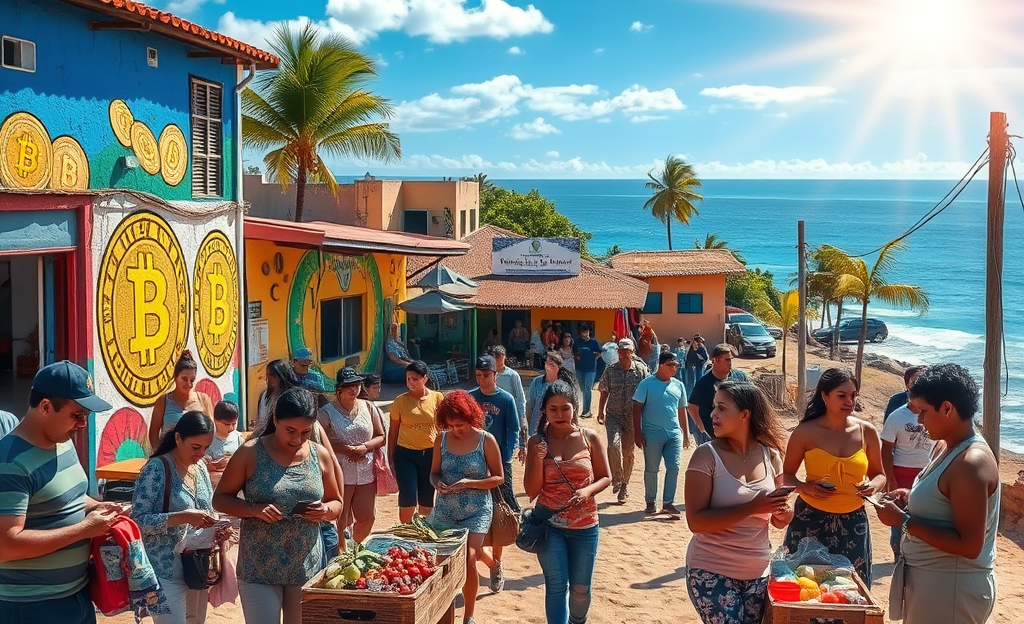
Bitcoin Adoption has reached new heights since El Salvador made it legal tender in 2021, positioning the country as a trailblazer in the cryptocurrency space.
This article will explore the journey of El Salvador’s Bitcoin Law, the innovative Bitcoin Beach project, and how these initiatives have inspired global efforts towards a bitcoin-based circular economy.
Despite recent legislative changes, the commitment to community education and continued cryptocurrency accumulation illustrates a transformative journey toward financial inclusion and sustainability.
Join us as we delve into the successes and challenges of this groundbreaking endeavor.
El Salvador’s Landmark Adoption of Bitcoin as Legal Tender
El Salvador made a historic move on June 9, 2021, when its Legislative Assembly boldly voted to approve the Bitcoin Law, marking a groundbreaking moment in the chapter of digital finance.
This decisive action positioned El Salvador on the global stage as the first nation to adopt Bitcoin as legal tender.
The law officially came into effect on September 7, 2021, amidst a wave of global attention and varied reactions from the financial world.
The government’s objectives were clear: to reduce economic dependence on the U.S. dollar, attract foreign investments, and foster financial inclusion within its borders.
The adoption of Bitcoin was met with both enthusiasm and skepticism, serving as a litmus test for other countries considering similar moves.
As part of this transformative shift, the Salvadoran government also launched the digital Chivo Wallet, designed to facilitate access to Bitcoin for its citizens and businesses.
This innovation not only exemplified the country’s digital-forward approach but also highlighted its commitment to pioneering financial technology.
The most transformative milestone was undeniably the operationalization of this digital wallet, as it signaled to both locals and the international community that El Salvador was serious about integrating Bitcoin into everyday commerce.
Despite the mixed global reactions, this bold venture has inspired similar initiatives worldwide, illustrating the profound potential for cryptocurrencies to challenge traditional economic frameworks.
Renegotiation of the Bitcoin Law with the IMF
In 2025, El Salvador renegotiated its Bitcoin Law with the International Monetary Fund, transforming the mandatory acceptance of bitcoin into a voluntary system for merchants.
This change, following discussions with the IMF, sought to balance financial sovereignty with economic stability.
Previously, businesses had to accept bitcoin alongside the U.S. dollar as a legal tender, which stirred concerns about volatility and financial integration.
Now, businesses can choose whether to engage in bitcoin transactions, allowing them more control over their financial operations.
Underlined text regarding implications for businesses includes increased flexibility in transaction handling, addressing concerns about cryptocurrency market fluctuations.
For consumers, this shift fosters a tailored experience where transactions can occur in their preferred currency, promoting financial inclusivity.
- Main legal change: Voluntary bitcoin acceptance
- Economic implication: Greater financial choice
- Social impact: Enhanced consumer control
Through cooperation with the IMF, El Salvador positions itself advantageously, encouraging innovation while focusing on economic resilience.
Bitcoin Beach: A Model for Circular Economy and Global Inspiration
Bitcoin Beach stands as a pioneering initiative that seamlessly integrates bitcoin into a local economy, showcasing the potential of a bitcoin-powered circular economy.
By encouraging the use of bitcoin among local businesses and residents in El Zonte, the project promotes economic sustainability and community growth.
As a result, Bitcoin Beach has inspired similar initiatives around the world, demonstrating the viability of cryptocurrencies in fostering financial inclusion and innovative economic models.
Community Education and Continued Adoption
Continuous community education is vital for bitcoin adoption in El Salvador, especially following the transition from a mandatory to a voluntary Bitcoin Law.
In the early days of Bitcoin Beach, the community of El Zonte showcased how education can unlock the potential of a decentralized economy.
Local leaders facilitated workshops, breaking down complex financial concepts into relatable scenarios, making the understanding of bitcoin accessible to everyone.
As a result, their efforts empowered residents to embrace financial technologies that once seemed out of reach, fostering a sense of financial autonomy.
While transitioning to a voluntary acceptance, El Salvador faces the challenge of sustaining enthusiasm and expanding adoption.
However, the community’s resilience and determination have led to the creation of new initiatives.
For instance, Bitcoin Beach’s grant program promotes new circular economies, inspiring communities globally.
These programs not only teach people how to use bitcoin but also emphasize its potential for financial inclusion.
The role of education is further highlighted when details of cryptocurrency usage, such as security measures and economic benefits, are taught in an engaging and simplified manner.
- Create a wallet
- Make a small transaction
- Understand transaction confirmations
- Learn security best practices
- Exercise using bitcoin in daily purchases
Through storytelling and interactive workshops, education becomes the driving force of sustained adoption.
These efforts ensure that people comprehend the transformative power of bitcoin and its role in their economic growth and stability.
Grant and Scholarship Programs to Foster New Bitcoin Economies
The Bitcoin Beach Grants program, as highlighted by various initiatives, fuels emerging bitcoin circular economies by supporting innovative projects that scale up activities globally.
With an emphasis on accessible knowledge, the grant promotes local bitcoin education and merchant adoption, which are essential steps towards building sustainable economies.
In parallel, the Scholarship for Circular Leaders unites visionaries worldwide, granting opportunities to learn firsthand from models like Bitcoin Beach Fellowship.
This initiative serves to cultivate leaders adept at implementing circular economies, reinforcing their relevance on a global scale.
These programs anticipate a significant impact: fostering cross-border collaborations and setting precedence in financial inclusivity while enhancing El Salvador’s pioneering role in the crypto sphere.
El Salvador’s Bitcoin Holdings and Financial Inclusion Impact
The government of El Salvador continues to accumulate bitcoin, demonstrating a committed strategy to integrate cryptocurrency into the nation’s economic framework with their treasury holding a total of 6,313.18 BTC.
This proactive stance not only asserts El Salvador’s position in the digital currency market but also importantly supports their vision to enhance financial inclusion across the country.
By renegotiating the Bitcoin Law, the government ensures bitcoin acceptance becomes voluntary, reflecting a balanced approach between empowering individual choice and fostering widespread adoption of this financial technology.
According to the global Bitcoin Circular Economy Project inspired by the Bitcoin Beach initiative, the model aims to educate communities and develop new circular economies, promoting greater bitcoin use.
Relevant data illustrates how the success of Bitcoin Beach significantly impacts financial inclusion in El Salvador.
While traditional banking access remains limited, bitcoin wallets offer a more accessible financial solution.
The table below highlights the contrast between these two financial service mediums, showcasing bitcoin’s superior penetration:
| Metric | Traditional Banking | Bitcoin Wallets |
|---|---|---|
| Access Rate | 30 percent | 60 percent |
Reflecting on this data, the transformative nature of bitcoin use in El Salvador cannot be overstated.
The increased rate of bitcoin wallet access over traditional banking services underscores its viability as a tool for enhancing financial inclusion.
Initiatives such as the Bitcoin Beach grant program exemplify this trajectory, as they support the creation of further circular economies that directly connect more individuals with the financial infrastructure necessary to participate in the modern economy.
In conclusion, the journey of El Salvador’s Bitcoin initiatives demonstrates the profound potential of cryptocurrency to drive financial inclusion and inspire global movements.
As the country continues to evolve its approach, the lessons learned from Bitcoin Beach and beyond serve as valuable insights for the future.



0 Comments