How to Check Conversations from Another WhatsApp

WhatsApp Access is a topic that raises significant concerns regarding privacy and security.
As we delve into the intricacies of checking conversations from another WhatsApp account, it’s essential to understand the boundaries of legality and consent.
Discover tips to access old chats easily!
Learn to monitor WhatsApp conversations securely!
Find out how to examine your chats from another phone!
This article will explore the necessary steps for accessing someone else’s messages, the importance of user privacy, and the potential implications of attempting unauthorized access.
By highlighting the proper channels and respecting privacy, we aim to guide readers through the complex landscape of WhatsApp usage while maintaining ethical standards and adhering to the platform’s policies.
Privacy and Legal Framework
Attempting to access someone else’s WhatsApp messages without their explicit consent is a serious violation of privacy and may result in criminal penalties according to multiple privacy regulations globally
These laws, including the Electronic Communications Privacy Act (ECPA) in the United States, strictly protect the confidentiality of electronic communications.
The ECPA specifically prohibits unauthorized interception or access to digital messages, covering platforms like WhatsApp.
This means that reading or monitoring another person’s chat history without their approval is not only unethical but also potentially illegal.
Under such privacy laws, violators may face hefty fines or even imprisonment depending on the severity of the breach.
WhatsApp itself uses end-to-end encryption to reinforce these privacy norms, making it technologically and legally bound to protect user content.
Therefore, any lawful method of checking WhatsApp conversations absolutely requires the accountholder’s explicit permission.
Without their authorization, any third-party attempt may lead to federal-level criminal charges and long-term legal consequences.
This legal framework emphasizes the importance of preserving user trust and respecting digital boundaries
Gaining Explicit Consent
Seeking explicit consent before accessing another person’s WhatsApp conversations is not just a legal matter—it’s an ethical obligation and a key element of digital privacy.
Whether for personal, legal, or technical reasons, ensuring full permission safeguards both parties and builds trust.
The most effective way to prove consent is through written permission, such as a signed note or email, which creates a clear, traceable record.
Another secure method is real-time confirmation on the individual’s device, where the person opens WhatsApp and authorizes the session while you’re present.
Verbal approval must always be documented, whether by recording the conversation (with mutual agreement) or by immediately writing down a summary endorsed by both parties.
These precautionary measures not only protect integrity but also comply with user protection laws like the WhatsApp Privacy Policy.
- Ask in writing.
- Use on-device confirmation.
- Log verbal approvals promptly.
Using Physical Device Access
Once you receive permission from the owner, start by asking them to unlock their smartphone.

Most devices use a PIN, fingerprint, or facial recognition to secure access, so always let the owner handle this step.
Once the home screen appears, locate the WhatsApp icon by either scrolling through the apps or using the device’s search feature.
Tap on the WhatsApp Messenger icon to open the application.
After WhatsApp opens, ensure you only navigate through chat conversations while the owner is next to you.
This respects their privacy and reinforces the transparent nature of the access.
Quickly glance through the relevant conversations, avoiding unnecessary swiping or tapping into unrelated chats.
When you’re done, make sure to press the back button until you return to the home screen.
For extra security, ask the owner to lock their phone again.
| Step | Security Note |
|---|---|
| Unlock device | Owner enters PIN |
| Open WhatsApp | Only access while owner is present |
| Review chats | Exit app when finished |
Access Through WhatsApp Web or Linked Devices
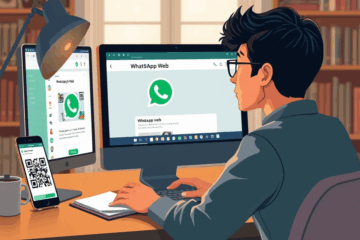
To access WhatsApp messages through a computer, open WhatsApp Web on any browser.
The page will display a QR code that must be scanned directly by the phone owner using the WhatsApp app’s Linked Devices feature.
The steps must be followed with their knowledge and approval, making it crucial to ensure consent before proceeding.
Unauthorized access carries serious risks, most notably session hijacking, which occurs when someone gains access without the owner’s awareness.
Because the session remains active until manually terminated, it becomes easy to review all conversations in real time, raising serious privacy concerns.
That’s why keeping transparency during the QR-code scan is not just ethical—it’s absolutely essential.
Once the chat activity has been assessed, it’s important to end the Web session.
Go to Linked Devices in the mobile WhatsApp settings and remove any active connections.
This prevents ongoing unauthorized access and protects both privacy and data security for all parties involved
Key Ethical Takeaways
Reviewing someone’s WhatsApp chats, even with their permission, carries a serious moral and ethical responsibility that goes beyond simple access.
This privilege demands full respect for the person’s digital privacy, and misuse can result in both personal and legal consequences.
The individual trusting you has every right to revoke this access at any time, and your awareness of that reinforces the importance of acting with discretion and care.
You are expected to keep all viewed information completely confidential, never storing or sharing any part of it unless explicitly allowed by the chat owner.
Unauthorized use not only undermines trust but can also lead to violations of privacy laws in many regions.
To protect both parties, WhatsApp’s privacy guidelines emphasize that user data must be handled in accordance with consent and transparency.
Whenever possible, maintain open discussions to clarify boundaries and ensure ongoing permission remains respected.
- Never store chat data without consent.
- Request renewed permission for continued access
- Avoid discussing private content with others under any circumstance
- Use chat access only for its original, agreed purpose
In conclusion, navigating WhatsApp Access requires a clear understanding of privacy, legality, and consent.
Always prioritize respect for personal boundaries and adhere to WhatsApp’s policies to ensure responsible usage of the platform.